
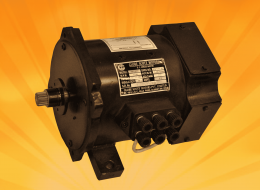
Introduction to Railway DC Motor Drives
Direct current (DC) motors remain the preferred electro-mechanical prime mover for railway signalling infrastructure worldwide. Their inherent ability to deliver massive starting torque directly from battery backup power systems (110V DC or 24V DC) makes DC motors ideal for critical safety equipment such as point machines, level crossing gates, and signal trip mechanisms.
However, selecting the right DC motor for railway signalling requires evaluating high starting current spikes, short-duration high-torque duty cycles, IP67 waterproof sealing, and strict RDSO compliance. As an established Railway Signalling Motor Manufacturer in India, Globe Scott Motors engineers high-reliability DC motors for railway OEMs. Explore our complete PMDC Motor Manufacturer in India catalog and our full DC Motor Manufacturer in India range.
1. Key Applications in Railway Signalling
- Electric Point Machines: Requires 110V DC or 24V DC motors to throw switch rails (up to 450 kg force) within 3.5 seconds.
- Level Crossing Lifting Barriers: Uses 24V DC PMDC geared motors to raise and lower 10-meter boom arms smoothly while maintaining holding torque against wind gusts.
- Train Stop & Semaphore Actuators: Employs compact 12V/24V DC actuators to position mechanical trip arms with high repeatability.
2. Vital Selection Factors for Railway DC Motors
| Selection Factor | Engineering Requirement | Why It Matters |
|---|---|---|
| Supply Voltage Compatibility | 110V DC or 24V DC standard battery bank. | Ensures motor operates directly from central signal relay battery banks during AC power outages. |
| IP67 Water Submersibility | Dual Viton seals & sealed housing. | Guarantees motor survives immersion in monsoon floodwaters along track beds. |
| High Starting Torque Ratio | $τ_{start} ≥ 3.5 × τ_{rated}$ | Overcomes mechanical friction, ballast dust, or ice jamming point blades. |
| Thermal Class H Insulation | 180°C magnet wire & VPI epoxy. | Prevents winding breakdown under heavy tropical heat and repeated operations. |
For high-torque reduction drives, explore our PMDC Geared Motor Manufacturer in India page and Geared Motor Manufacturer in India section. For maintenance procedures, check our DC motor maintenance and brush inspection guide and our guide on key benefits of using DC motors. For PMDC principles, review what is a PMDC motor and its selection guide. For brushless options, browse our BLDC Motor Manufacturer in India catalog.
3. Frequently Asked Questions (FAQs)
Q1: Why are DC motors preferred over AC motors for railway signalling?
DC motors operate directly from trackside battery backup banks (110V DC or 24V DC), ensuring fail-safe operation during total AC grid power blackouts.
Q2: What is the significance of 110V DC in railway signalling?
110V DC minimizes voltage drop across long control cables extending from central signal relay towers to remote trackside point machines.
Q3: How does a railway DC motor handle sudden mechanical jams?
Point machine DC motors are paired with mechanical friction clutches that slip if foreign objects block the switch blades, protecting the motor from thermal burnout.
Q4: What is the typical operating duty cycle for a signalling DC motor?
Signalling motors operate under short-time intermittent duty (S2 duty), delivering high power for 3 to 10 seconds per cycle followed by rest periods.
Q5: Are Globe Scott Motors' signalling DC motors RDSO approved?
Yes. Globe Scott Motors produces RDSO-compliant DC motors meeting IRS S-24, IRS S-37, and IRS S-41 specifications.
Q6: What maintenance do trackside DC motors require?
Routine maintenance involves checking brush wear, cleaning carbon dust from commutator slots, and inspecting IP67 housing seals every 6 to 12 months.
Q7: Can BLDC motors be used in railway signalling?
Yes. Modern BLDC motors with 24V/110V DC inverter drives are increasingly specified for maintenance-free auxiliary applications.
Q8: How can I order custom railway DC motors from Globe Scott Motors?
You can submit your voltage, torque, and mounting specifications to our engineering team via our contact our motor engineering specialists page.
Conclusion
DC motors are the foundation of safe, reliable railway signalling systems. Choosing motors built to IP67 waterproof standards and certified by RDSO ensures uninterrupted rail traffic operations.
Globe Scott Motors is a premier manufacturer of railway DC motors in India. Contact our application engineers today for technical guidance and tender pricing.