
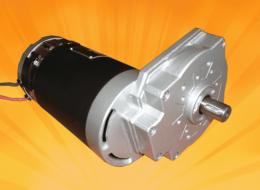
Introduction to Geared PMDC Motors
In many industrial, automotive, and automation applications, high output speed is less important than low shaft speed coupled with substantial rotational torque. Standard direct-drive Permanent Magnet DC (PMDC) motors typically rotate at high speeds ranging from 1,500 to 5,000 RPM. Connecting a mechanical gearbox (gearhead) directly to the PMDC motor shaft creates a **Geared PMDC Motor**.
A geared PMDC motor combines the high power density, simple electrical control, and linear torque-speed performance of a brushed PMDC motor with the mechanical torque multiplication and speed reduction of a precision gear train. At Globe Scott Motors manufacturing expertise, we engineer an extensive lineup of custom gearheads paired with precision PMDC armatures. Explore our complete heavy-duty PMDC geared motors and our full range of industrial geared motor solutions.
1. How Does a Geared PMDC Motor Work?
A geared PMDC motor operates through two integrated stages: **electromechanical energy conversion** followed by **mechanical power transmission**.
A. Motor Stage
The PMDC motor converts input DC electrical power ($V × I$) into high-speed rotational mechanical power. Permanent magnets on the stator create a fixed magnetic flux, while current flowing through the armature windings generates electromagnetic torque via Lorentz's force.
B. Gearbox Stage
The motor's high-speed pinion shaft meshes directly with an attached mechanical gear reduction train. The fundamental mechanical equations governing gear reduction are:
Where τmotor is the motor output torque, i is the gear reduction ratio, and ηgearbox is the mechanical transmission efficiency of the gearbox (ranging from 65% to 95% depending on gear type and stage count).
2. Types of Gearheads Used with PMDC Motors
| Gearbox Architecture | Efficiency (η) | Backlash Level | Key Engineering Characteristics |
|---|---|---|---|
| Planetary Gearbox | 85% to 95% | Low (<10 arcmin) | High torque density, coaxial shaft arrangement, excellent shock load resistance; ideal for heavy industrial automation. |
| Spur Gearbox | 80% to 90% | Moderate (1° to 2°) | Cost-effective parallel shaft layout; highly efficient for low-to-medium torque applications. |
| Worm Gearbox | 50% to 75% | High | Right-angle output shaft, high single-stage gear ratios (up to 100:1), self-locking capability to hold vertical loads. |
| Helical Gearbox | 85% to 92% | Low | Angled gear teeth ensure smooth mesh engagement, delivering exceptionally low acoustic noise and smooth transmission. |
3. Key Benefits of Geared PMDC Motors
- High Output Torque in a Compact Envelope: Gear reduction allows small, lightweight PMDC motors to produce hundreds of Newton-meters of torque without requiring oversized motor frames.
- Precise Low-Speed Operation: Enables steady, vibration-free rotation at low speeds (1 RPM to 300 RPM) where direct-drive motors might cog or stall.
- Self-Locking Capability (Worm Gearheads): High-ratio worm gearheads prevent back-driving, acting as a mechanical holding brake when power is disconnected—essential for elevators, medical beds, and cranes.
- High System Efficiency: Combining a 90%+ efficient PMDC motor with planetary gearing ensures maximum battery runtime in mobile equipment. Learn more about core motor benefits in our guide on key benefits of using DC motors.
- Simplified Control: Simple PWM armature voltage adjustment regulates overall output speed linearly without complex electronic feedback loops.
4. Typical Industrial & Commercial Applications
A. Industrial Automation & Material Handling
Driving belt conveyors, automated sorting gates, packaging machinery, palletizers, and indexing turntables. Explore our broader industrial and automotive motor applications overview.
B. Medical & Healthcare Mobility
Powering motorized wheelchairs, patient lift chairs, adjustable hospital bed actuators, and surgical table positioners where high reliability and low noise are mandatory.
C. Automotive & Off-Highway Vehicles
Used in agricultural seed metering drives, electric tailgate lifts, heavy truck cabin tilt systems, and commercial door actuators. Explore our standard high-performance PMDC motors catalog for base motor specs.
D. Solar Trackers & Gate Openers
High-torque worm-geared PMDC motors provide strong wind-holding capability for outdoor solar panel positioning and automated sliding security gates.
5. Step-by-Step Geared PMDC Motor Selection Guide
Step 1: Define Required Output Speed (\text{RPM}_{out}) & Output Torque (τout)
Determine the maximum continuous and peak shock load torque required at the final driven shaft.
Step 2: Select Gearbox Type Based on Shaft Orientation & Backlash
Choose inline coaxial shafts (Planetary), parallel shafts (Spur), or right-angle shafts (Worm) based on physical space constraints and allowable backlash.
Step 3: Calculate Required Motor Base Torque and Ratio
Select a gear ratio i that brings the motor's operating speed into its sweet spot (typically 2,000 to 3,500 RPM). Account for gearbox efficiency:
Step 4: Check Overhung & Thrust Load Ratings
Verify that the output shaft bearings can safely withstand radial belt tension (F_{radial}) and axial push/pull thrust loads (F_{thrust}). Routine maintenance protects gear sets; review our DC motor maintenance and brush inspection guide.
For background on brushed vs. brushless choices, read our comparison on PMDC vs BLDC motors or explore our brushless DC (BLDC) motor series.
6. Frequently Asked Questions (FAQs)
Q1: What is the main advantage of a geared PMDC motor over a direct-drive PMDC motor?
A geared PMDC motor multiplies torque output proportionally to its gear ratio while reducing output speed, allowing a small, efficient motor to drive heavy mechanical loads that would stall a direct-drive motor.
Q2: Can a geared PMDC motor be back-driven by the load?
Spur and planetary geared PMDC motors can be back-driven easily. However, high-ratio worm geared PMDC motors (ratios > 30:1) are inherently self-locking and resist back-driving, keeping loads stationary when unpowered.
Q3: How does gearbox efficiency affect battery consumption?
Planetary gearheads (85%–95% efficiency) draw less battery current to produce a given output torque than lower-efficiency worm gearheads (50%–70% efficiency), making planetary geared PMDC motors preferable for mobile battery systems.
Q4: How long do gearheads last on a PMDC motor?
With synthetic grease lubrication and operating within rated torque limits, industrial planetary and spur gearboxes typically match or exceed the brush lifetime of the motor (5,000+ operating hours).
Q5: Can I reverse the rotation of a geared PMDC motor?
Yes. Reversing the DC supply voltage polarity at the motor terminals reverses the motor direction, which instantly reverses output gear rotation.
Q6: What causes noise in a geared PMDC motor?
Noise is primarily generated by gear teeth mesh impacts, high backlash, or insufficient lubrication. Helical and planetary gearheads operate significantly quieter than spur gearheads.
Q7: What lubrication is used inside PMDC gearboxes?
Fractional horsepower PMDC gearheads use lifetime synthetic grease (Class NLGI 2), eliminating the need for periodic oil changes.
Q8: Where can I order custom geared PMDC motors with specific ratios and shafts?
Globe Scott Motors customizes gear ratios, shaft geometries, and mounting options for OEMs. Submit your requirements on our contact our motor engineering specialists page.
Conclusion
Geared PMDC motors represent a versatile, robust, and cost-effective solution for high-torque, low-speed motion control. Matching the right gearhead architecture with a precision PMDC motor ensures long service life and high operational efficiency.
Partner with Globe Scott Motors to engineer custom geared motor drives for your machinery. Contact our application specialists today to request technical advice and OEM pricing.