
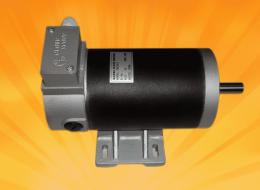
Introduction to Industrial Motor Sizing
Selecting the correct motor for industrial automation, conveyor systems, indexing drives, and heavy machinery is a crucial engineering task. Oversizing a motor leads to unnecessary capital expenditure, bulkier mechanical housings, and oversized power supplies. Conversely, undersizing a motor causes frequent thermal trips, rapid brush degradation, winding burnout, and costly machine downtime.
Permanent Magnet Direct Current (PMDC) motors are favored in industrial automation due to their linear speed-torque relationship, high starting torque, compact physical footprint, and simplified voltage-based speed control. However, choosing the right PMDC motor requires systematic evaluation of dynamic load profiles, thermal dissipation limits, duty cycles, and environmental factors. At Globe Scott Motors manufacturing expertise, we assist industrial OEMs in sizing precision motor drives tailored to demanding operating conditions. Explore our dedicated high-performance PMDC motors catalog for detailed technical data sheets.
1. Step-by-Step Engineering Selection Procedure
Step 1: Calculate Mechanical Torque Requirements
Mechanical torque is the fundamental parameter governing motor sizing. You must determine three distinct torque values:
- Continuous Load Torque (τcont): The steady-state torque required to overcome mechanical friction, process resistance, and gravity during normal operation.
- Peak Acceleration Torque (τpeak): The maximum torque demanded during rapid velocity changes or initial startup to accelerate system inertia (Jtotal):
τ_{peak} = τ_{cont} + J_{total} × αWhere α is rotational angular acceleration (rad/s2).
- Stall Torque (τstall): The maximum torque the motor generates at zero speed. Ensure τpeak remains below 70% of the motor's rated stall torque.
Step 2: Determine Required Operating Speed & Power
Calculate the required shaft rotational speed (\text{RPM} or $ω \text{ in rad/s}$). Compute mechanical output power (Pmech):
Always apply a **20% to 30% engineering safety margin** when selecting the motor's continuous mechanical power rating to accommodate unforeseen mechanical binding or load variations.
2. Analyzing PMDC Speed-Torque Curves
Unlike AC induction motors, PMDC motors possess a remarkably linear speed-torque characteristic curve:
| Operating Region | Description | Sizing Recommendation |
|---|---|---|
| Continuous Operating Zone | Region where thermal dissipation balances I2R electrical losses without exceeding insulation limits. | The continuous load point ($τ_{cont}, ω_{operating}$) must lie fully inside this zone for S1 duty cycles. |
| Intermittent Operating Zone | Region above continuous rating where the motor can operate for short bursts during acceleration. | Allowed only for short durations ($t_{acc} < 10 seconds$) provided average RMS torque remains within thermal limits. |
| Stall Point | Zero RPM operating point under maximum starting current (Istall = V / Ra). | Avoid prolonged operation near stall to prevent rapid commutator degradation and magnet demagnetization. |
3. Evaluating Duty Cycle and Thermal Limits
Industrial applications operate under various IEC duty cycles. Selecting the right motor depends heavily on duty classification:
- Continuous Duty (S1): Machine operates under constant load indefinitely until thermal equilibrium is reached. Motor continuous torque rating must equal or exceed actual load torque.
- Intermittent Periodic Duty (S3/S6): Machine undergoes repeated cycles of load and rest. Calculate the **Root-Mean-Square (RMS) Torque**:
τ_{rms} = \sqrt{\frac{τ_1^2 × t_1 + τ_2^2 × t_2 + \dots + τ_n^2 × t_n}{t_{total}}}Select a PMDC motor whose continuous rating exceeds τrms.
For applications experiencing high thermal stress, choosing high insulation classes (Class F 155°C or Class H 180°C) prevents premature winding breakdown. For background on basic motor benefits, see our guide on the key benefits of using DC motors.
4. Electrical Power Supply and Speed Controller Matching
Ensure that your electrical power supply and electronic motor driver match the PMDC motor's electrical ratings:
- Voltage Selection: Match nominal motor rating (12V, 24V, 48V, 90V, or 180V DC) to available system supply or battery voltage.
- Current Capacity: Verify that the DC power supply can deliver peak stall current (Istall) during starting spikes without triggering low-voltage cutoffs.
- PWM Chopper Speed Control: Select Pulse Width Modulation (PWM) drivers operating at frequencies between 10kHz and 20kHz to ensure smooth low-speed torque delivery without audible coil whine.
If your application requires substantial torque multiplication at lower output speeds, pairing PMDC drives with precision gearheads is recommended. Explore our range of heavy-duty PMDC geared motors and broader industrial geared motor solutions.
5. Environmental Sealing (IP Rating) and Mechanical Mounting
A. Enclosure Sealing (IP Codes)
- IP44: Standard protection for clean indoor industrial environments against dust and light splash.
- IP65: Dust-tight and protected against water jets; essential for food processing or outdoor machinery.
- IP67: Fully sealed against temporary immersion; required for heavy industrial washdown zones.
B. Radial and Axial Shaft Loads
When driving belts, chains, or heavy overhang pulleys, verify the manufacturer's maximum allowable **radial shaft load (F_{radial})** and **axial thrust load (F_{axial})** to prevent bearing damage. For complete details on maintaining industrial brushed motors, refer to our DC motor maintenance and brush inspection guide.
To learn more about fundamental PMDC construction, read our core guide on what is a PMDC motor and its working principle or compare brushed technology with our brushless DC (BLDC) motor series.
6. Frequently Asked Questions (FAQs)
Q1: How do I know if I need a PMDC motor or a PMDC geared motor?
If your application requires output speeds below 500 RPM alongside high shaft torque, a geared PMDC motor is essential. Direct-drive PMDC motors typically run at 1,500 to 4,000 RPM, where a gearhead efficiently converts high RPM into usable mechanical torque.
Q2: What safety margin should I apply when sizing a PMDC motor?
Engineers recommend applying a 20% to 30% safety margin above calculated continuous load torque to account for mechanical friction changes, ambient temperature spikes, and supply voltage fluctuations.
Q3: What causes a PMDC motor to overheat in an industrial application?
Overheating is caused by continuous operation above rated torque, restricted airflow around the motor housing, high ambient temperatures exceeding 40°C without derating, or operating under low voltage causing excessive current draw.
Q4: How does ambient temperature affect PMDC motor selection?
Standard PMDC motor ratings assume a maximum ambient temperature of 40°C. If ambient temperatures exceed 40°C, you must derate the motor's allowable continuous current by approximately 1% per °C above 40°C.
Q5: Can I run a 24V PMDC motor at 12V?
Yes. Running a 24V motor at 12V reduces no-load speed by approximately 50%. Maximum stall torque will also be halved, but the motor will operate safely at lower speeds.
Q6: What is the impact of excessive radial load on a PMDC motor shaft?
Excessive radial load (caused by overly tight drive belts or large pulleys) causes shaft deflection, premature ball bearing wear, mechanical vibration, and potential brush mis-alignment.
Q7: What maintenance is required for industrial PMDC motors?
Routine maintenance includes periodic inspection of carbon brushes every 2,000 to 3,000 hours, cleaning accumulated carbon dust from commutator slots, and verifying bearing smoothness.
Q8: Where can I get custom engineering assistance to size a PMDC motor for my application?
You can consult directly with our application engineering team at Globe Scott Motors. Visit our contact our motor engineering specialists page to submit your application details.
Conclusion
Choosing the right PMDC motor for industrial applications requires a systematic evaluation of continuous and peak torques, operating speed, thermal duty cycle, electrical matching, and mechanical environmental factors. Proper sizing ensures high machine reliability, low operating costs, and long service life.
At Globe Scott Motors, our engineering team brings over 35 years of expertise to help OEMs select and customize industrial motor drives. Contact us today to analyze your operational requirements and receive custom motor recommendations.