
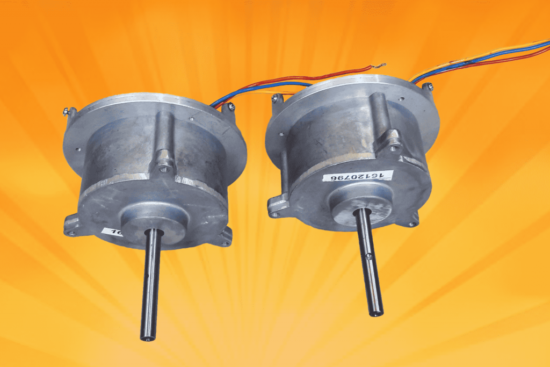
Introduction to Industrial BLDC Motor Sizing
Brushless Direct Current (BLDC) motors are increasingly specified in industrial automation, robotics, conveyor drives, medical equipment, and CNC machinery. Thanks to their high energy efficiency (90%+), high power-to-weight ratio, maintenance-free operational life (>20,000 hours), and precise speed regulation, BLDC motors outperform traditional brushed motors in heavy-duty continuous applications.
However, sizing a BLDC motor requires a clear understanding of electromechanical equations, motor constants (Kv and Kt), electronic speed controller (ESC) inverter selection, rotor position feedback mechanisms, and thermal duty limits. At Globe Scott Motors manufacturing expertise, we assist industrial OEMs in sizing custom BLDC motors and matching electronic drives. Explore our specialized brushless DC (BLDC) motor series to view comprehensive technical specifications.
1. Step-by-Step BLDC Motor Selection Procedure
### Step 1: Calculate Continuous & Peak Torque Requirements Determine continuous load torque (τcont), peak acceleration torque (τpeak), and operating speed (ω):2. Selecting Rotor Position Feedback Sensors
Because BLDC motors rely on electronic commutation, the electronic speed controller (ESC) must know the precise angular position of the permanent magnet rotor:| Feedback Technology | Operating Mechanism | Best Industrial Application |
|---|---|---|
| Sensored (Hall Effect Sensors) | Three digital Hall sensors embedded 120° apart in the stator detect rotor magnet position at zero speed. | Heavy load startup applications requiring full starting torque (e.g., AGVs, electric traction, winches). |
| Sensorless (Back-EMF Sensing) | ESC measures induced Back-EMF voltage on un-energized stator phases during rotation. | High-speed continuous drives where zero-speed starting torque is minimal (e.g., fans, blowers, centrifugal pumps). |
| Encoder / Resolver Feedback | High-resolution optical or magnetic encoder mounted on rear motor shaft extension. | High-precision servo positioning applications (e.g., robotic arm joints, CNC axes). |
3. Electronic Speed Controller (ESC) & Drive Selection
A BLDC motor cannot operate directly from a DC battery or power supply; it requires an intelligent Electronic Speed Controller (ESC). Choose between two main drive algorithms:- Trapezoidal 6-Step Commutation: Energizes two of three phases at any moment. Simple, cost-effective drive electronics; ideal for basic industrial fans, pumps, and blowers.
- Sinusoidal / Field-Oriented Control (FOC): Continuously modulates smooth 3-phase sinusoidal currents into all three windings. Delivers whisper-quiet rotation, zero torque ripple, and maximum efficiency at low speeds; ideal for medical equipment, AGVs, and robotics.
For applications requiring low output speeds and heavy torque, pairing BLDC motors with high-efficiency gearheads is recommended. Explore our range of heavy-duty PMDC geared motors and broader industrial geared motor solutions.
4. Environmental Sealing and Duty Cycles
Ensure that the selected BLDC motor enclosure matches the operational environment:- Enclosure Protection (IP Code): Select IP65 for dusty factory floors or IP67 for washdown medical and food processing environments.
- Thermal Insulation Class: Specify Class F (155°C) or Class H (180°C) insulation to protect stator windings against thermal spikes under continuous S1 duty cycles.
For maintenance comparisons between brushed and brushless systems, review our DC motor maintenance and brush inspection guide and our guide on key benefits of using DC motors.
To explore foundational BLDC principles, read our dedicated core article on what is a BLDC motor and its working principle or compare brushless drives with our high-performance PMDC motors catalog and our guide on what is a PMDC motor and its selection guide.
5. Frequently Asked Questions (FAQs)
### Q1: What is the main difference between sensored and sensorless BLDC motors? Sensored BLDC motors use embedded Hall sensors to detect rotor position at zero speed, providing high starting torque under heavy loads. Sensorless BLDC motors detect rotor position from induced Back-EMF voltage, requiring the motor to be spinning before position can be determined. ### Q2: How do I select the right Kv rating for a BLDC motor? Select a Kv rating such that your available DC supply voltage multiplied by Kv yields a no-load speed approximately 20% to 30% higher than your target operating RPM. ### Q3: What is Field-Oriented Control (FOC) in BLDC drives? FOC is an advanced vector control algorithm that smoothly controls 3-phase stator currents to maintain a 90° angle between stator and rotor magnetic fields, maximizing efficiency and eliminating torque ripple. ### Q4: Can a BLDC motor be operated without an electronic speed controller (ESC)? No. Connecting a BLDC motor directly to a DC power supply without an ESC will lock the rotor in place and cause immediate electrical shorting and winding burnout. ### Q5: How long do BLDC motors last in continuous industrial operation? Because BLDC motors have no mechanical brushes, their operational lifespan exceeds 20,000 hours, limited only by ball bearing grease longevity. ### Q6: Can a BLDC motor be customized with a mechanical brake or encoder? Yes. Custom industrial BLDC motors can be fitted with rear-shaft electromagnetic holding brakes and high-resolution quadrature optical encoders. ### Q7: Are BLDC motors suitable for outdoor washdown environments? Yes, when built with IP65 or IP67 sealed housings, stainless steel shafts, and potted electronics, BLDC motors withstand outdoor weather and industrial washdown chemicals. Explore industrial and automotive motor applications for real-world deployments. ### Q8: Where can I get custom BLDC motor recommendations from Globe Scott Motors? Our engineering team at Globe Scott Motors can calculate your required Kv, torque, and ESC specs. You can contact our motor engineering specialists page to submit your project requirements.Conclusion
Selecting the right BLDC motor for industrial applications requires systematic calculation of continuous and peak load torques, velocity constant (Kv), position feedback sensors, and Electronic Speed Controller (ESC) drive algorithms. Proper sizing guarantees maximum efficiency, long maintenance-free service life, and high machine productivity.
Partner with Globe Scott Motors to engineer high-performance BLDC motor solutions for your OEM machinery. Contact our application specialists today to request technical guidance and product quotes.