
Procurement teams use company age as a proxy for reliability, and they are broadly right to. But "established 1985" on a letterhead does not explain why it should reduce your risk. This piece unpacks what four decades of continuous permanent magnet DC motor manufacturing in a single facility actually buys a buyer.
The 1985 Indo-US Joint Venture and What It Set Up
Globe Scott Motors was established in 1985 as an Indo-US joint venture with technical collaboration from M/S Scott Motors Inc., USA. It was the first company to introduce and manufacture the permanent magnet DC motor in India.
Two things followed from that structure. The plant started with a transferred, proven design methodology rather than a reverse-engineered one, which matters because permanent magnet machines are unforgiving of magnetic circuit errors. And because there was no domestic PMDC precedent to copy, the company had to build its own test and validation capability from the beginning instead of relying on an established supply base. That capability is documented on our electromechanical integrity page and summarised in our company profile.
Why Tooling Maturity Reduces First-Article Failure Rates
This is the least visible advantage and probably the largest.
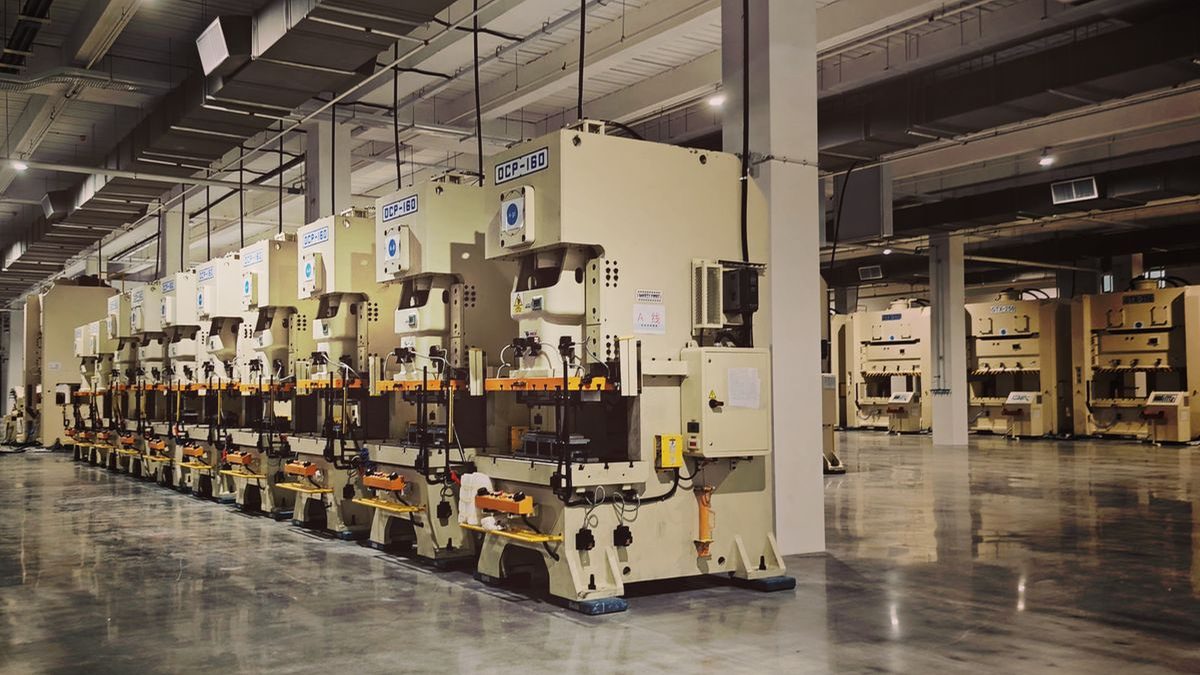
Every motor design is realised through tooling: lamination dies, winding fixtures, housing jigs, assembly fixtures, test rigs. A new manufacturer builds tooling from a drawing and discovers its shortcomings in production. A plant that has been building the same family of machines for forty years has already found them. The die that produces a clean lamination edge, the fixture that holds concentricity through the press fit, the jig that seats magnets without chipping them: those refinements exist as physical assets, not as documentation.
Two practical consequences for a buyer:
- First articles behave more like series parts. The gap between prototype and production narrows when the prototype is made on production tooling rather than improvised.
- Tolerance is held without heroics. Consistency comes from the process being capable, not from inspection catching a wide distribution.
We keep our own tool room and machining facility on site, so tooling changes for a custom programme do not queue behind an external vendor's schedule. That is a large part of why the custom cycles described in our article on PMDC motor customisation are as short as they are.
Failure-Mode History Is an Asset You Cannot Buy
Forty years of field returns is a database. It tells you which brush grade survives a particular duty cycle, which bearing preload causes trouble at high ambient temperature, which magnet supplier's batches drift, and which sealing arrangement actually holds up in a wash-down environment.
A new entrant has to learn each of these from its own warranty claims. That learning is real, but the customer pays the tuition. Our guidance on common DC motor failure modes and preventive maintenance is written directly out of that history.
A Short Walk Through What Quality Control Actually Checks
"We test everything" means nothing. Here is the specific sequence.
| Stage | What Is Checked | Why It Matters |
|---|---|---|
| Magnet testing | Residual flux density and coercive force | Magnet variation directly changes motor speed and torque constants, so flux must be held near constant across batches |
| Ultrasonic flaw detection | Internal cracks and porosity in every magnet | Cracks introduced during magnet shipping cause field failures that no electrical test at assembly would catch |
| Armature testing | Winding integrity on the machine | Catches winding and commutator faults before the motor is closed up |
| Dynamometer testing | Performance under actual load; horsepower and efficiency verified on every motor | Back-to-back and eddy-current dynamometer testing confirms the unit meets its rating, not just that it turns |
| Endurance testing | Continuous run at rated load | Evaluates bearing and brush life and simulates real field wear on commutator and brushes |
The magnet stages are the ones outsiders usually miss. In a permanent magnet machine the magnet is the field, so an uncontrolled magnet is an uncontrolled motor. Checking flux and screening ultrasonically for internal porosity is what keeps specifications inside a narrow band unit to unit. The complete sequence is described in what happens to a motor before it ships.
Supply Continuity: Why a 40-Year Plant Does Not Disappear Mid-Order
For a buyer designing a motor into a product with a ten-year life, supplier survival is a specification issue. Several things make continuity verifiable rather than assumed:
- Export discipline. Around 45% of our DC motors and gearboxes go to Europe, which requires sustained conformity and documentation performance.
- Independent ratings. We are registered with NSIC and hold a CRISIL performance and credit rating.
- Certification. ISO 9001:2015 for the quality system, CE marking on the low voltage range.
- Public-sector approval. We are an approved supplier to Indian Railways for point machine motors, point machine systems and electric lifting barriers, an approval that is audited rather than self-declared. See our railway signalling product range and the Indian Railways supply case study.
- Single-site vertical integration. Design, tooling, machining, winding, assembly and testing at one plant in Killa Pardi, Gujarat, means fewer external dependencies that can fail independently.
How to Use This When Comparing Suppliers
Age alone is not the test. The useful questions are whether tooling is owned or rented, whether magnets are incoming-inspected, whether every motor sees a dynamometer or only a sample, and whether the supplier can show an audited approval from a demanding customer. Our guide to selecting an industrial motor manufacturer in India turns those into a checklist, and the PMDC motor buyer's guide covers the commercial side. If you are ready to specify, start with our PMDC motor range or the full product catalogue.
Frequently Asked Questions
Q1. What does it mean that Globe Scott Motors was an Indo-US joint venture?
The company was established in 1985 with technical collaboration from M/S Scott Motors Inc., USA. That gave the plant a proven permanent magnet DC design methodology from the start, and it was the first company to introduce and manufacture the PMDC motor in India.
Q2. Why does manufacturing longevity matter when buying motors?
It matters through three specific mechanisms: mature tooling that produces first articles behaving like series parts, an accumulated failure-mode history that informs brush grade, bearing and sealing choices, and demonstrated supply continuity for products with long service lives.
Q3. What quality checks does every motor pass through?
Magnet testing for residual flux density and coercive force, ultrasonic flaw detection on every magnet, armature testing on the machine, dynamometer testing where horsepower and efficiency are verified on every motor, and endurance testing at rated load to evaluate bearing and brush life.
Q4. Why is magnet testing so important in a PMDC motor?
In a permanent magnet machine the magnets supply the field, so their properties set the motor's torque and speed constants directly. Variation in magnetic properties produces intolerable variation in motor specifications, which is why total flux is held near constant and every magnet is screened ultrasonically for internal cracks and porosity.
Q5. What certifications and approvals does Globe Scott Motors hold?
ISO 9001:2015 certification, CE marking for the low voltage range of motors, NSIC registration, a CRISIL performance and credit rating, and approved supplier status with Indian Railways for point machine motors, point machine systems and electric lifting barriers.
Q6. Where is the manufacturing facility?
A1/19, G.I.D.C. Industrial Estate, Killa Pardi 396125, Gujarat, India. Design, tooling, machining, winding, assembly and testing all take place at this single site.
Q7. Do you export motors from India?
Yes. Roughly 45% of our DC motors and gearboxes are exported to Europe. Conformity and test certificates are available on request, and we hold CE marking for the low voltage range.
Q8. How should I compare Indian motor manufacturers?
Ask whether tooling is owned in-house, whether incoming magnets are inspected, whether every motor is dynamometer tested or only a sample, what independent approvals exist, and how much of the process happens on one site versus through subcontractors.
Conclusion
Longevity is a useful proxy for reliability only when you can name the mechanism. For a permanent magnet DC motor plant, the mechanisms are mature tooling, an accumulated failure-mode history, disciplined incoming magnet inspection, dynamometer verification of every unit, and enough independent approval to make supply continuity credible.
Globe Scott Motors has been running all five from the same Killa Pardi plant since 1985. That is what the date on the letterhead is actually worth.
Evaluating Indian motor manufacturers for a long-life product?
Ask us for our quality documentation, test certificates and approval records. We are happy to be audited.