
Introduction to Motor Mechanics
Improper motor sizing is one of the leading causes of machinery failure in industrial automation. Selecting an undersized electric motor causes thermal overheating and premature motor burnout, while choosing an oversized motor increases energy consumption and system cost unnecessarily.
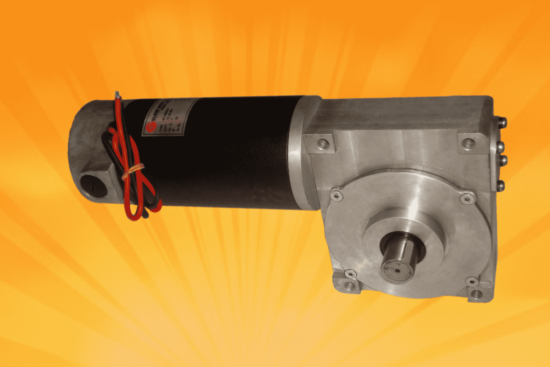
Accurately calculating required motor **Torque (τ)**, rotational **Speed (N)**, and continuous **Mechanical Power (P)** is mandatory before selecting a motor drive. As an established PMDC Motor Manufacturer in India, Globe Scott Motors assists OEMs with precise electromechanical sizing. Explore our specialized Geared Motor Manufacturer in India catalog, our PMDC Geared Motor Manufacturer in India selection, and our DC Motor Manufacturer in India portfolio.
1. Fundamental Torque and Power Equations
A. Mechanical Power Formula
Mechanical output power (P, in Watts) is calculated from torque (τ, in Newton-meters) and rotational speed (N, in RPM):
B. Torque Calculation Formula
Rearranging the power formula allows calculating required torque (τ):
2. Accounting for Inertia & Acceleration Torque
Total required motor torque (τtotal) consists of static load friction torque (τfriction) and dynamic acceleration torque (τaccel):
Where Jtotal is total system moment of inertia (\text{kg}×\text{m}^2) and taccel is required acceleration time in seconds.
3. Gear Reduction Calculation Rules
| Parameter | Without Gearbox | With Gearbox (Ratio i) |
|---|---|---|
| Output Speed (Nout) | Nmotor | N_{out} = \frac{N_{motor}}{i} |
| Output Torque (τout) | τmotor | τ_{out} = τ_{motor} × i × η_{gearbox} |
| Reflected Inertia (Jref) | Jload | J_{ref} = \frac{J_{load}}{i^2} |
For application examples, explore our industrial and automotive motor applications overview. For maintenance tips, see our DC motor maintenance and brush inspection guide and our guide on key benefits of using DC motors. For PMDC principles, review what is a PMDC motor and its selection guide. For brushless options, browse our BLDC Motor Manufacturer in India catalog.
4. Frequently Asked Questions (FAQs)
Q1: What units are standard for torque calculations?
Newton-meters (N·m) is the standard SI unit for torque. Conversions: $1\text{ N}×\text{m} = 10.197kg×\text{cm} = 141.6\text{ oz}×\text{in}$.
Q2: What safety factor should be applied to calculated torque?
Apply a safety factor of 1.25 to 1.50 for continuous industrial applications, and 1.50 to 2.00 for heavy shock load applications.
Q3: How does gearbox efficiency affect output torque?
Spur gearboxes operate at ~90% efficiency, planetary gearboxes at ~85–95%, and high-ratio worm gearboxes at ~50–75%. Always multiply output torque by ηgearbox.
Q4: What is the optimal inertia ratio between load and motor?
For high-performance motion control, the load inertia reflected to the motor should satisfy $J_{load} / J_{motor} ≤ 5:1$ (ideally $1:1$).
Q5: Can Globe Scott Motors perform torque calculations for custom machine designs?
Yes. Globe Scott Motors' application engineers provide complimentary motor sizing and torque verification services for machine builders.
Q6: Why is starting torque higher than running torque?
Starting torque must overcome static friction (stiction) and accelerate initial system inertia from zero speed.
Q7: How does armature voltage affect motor RPM in PMDC motors?
In PMDC motors, speed is directly proportional to applied DC armature voltage (N ∝ Varmature).
Q8: Where can I get technical motor sizing support in India?
Submit your machine speed, load mass, and cycle details to our engineering team via our contact our motor engineering specialists page.
Conclusion
Accurate motor torque and speed calculations prevent machine failures, optimize energy efficiency, and ensure long motor operating life.
Globe Scott Motors provides expert motor selection support across India. Contact our engineering specialists today for technical assistance and custom motor sizing.