
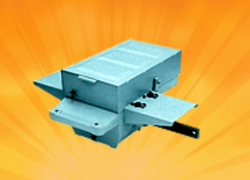
Introduction to Point Machine Motors
An electric point machine is a critical trackside actuator responsible for mechanically unlocking, throwing, and locking heavy steel railway point blades (switches). The core prime mover inside an electric point machine is the **Point Machine Motor**.
Because train movements depend entirely on point machine reliability, these motors must deliver instant high starting torque to move heavy switch rails within a tight 2-to-4-second window. They must operate flawlessly under severe trackside conditions, monsoon flooding, and heavy vibration. As a premier Railway Signalling Motor Manufacturer in India, Globe Scott Motors engineers RDSO-compliant 110V DC and 24V DC point machine motors. Explore our complete PMDC Motor Manufacturer in India catalog and our comprehensive DC Motor Manufacturer in India selection.
1. Working Principle of a Point Machine Motor
When the signal cabin sends a track switching command, DC electrical power (typically 110V DC or 24V DC) energizes the point machine motor. The high-speed armature rotation is transmitted through an internal gear reduction assembly and friction clutch to drive a rack-and-pinion or throw-bar mechanism.
- Unlocking Phase: The motor drives the throw-bar to disengage mechanical locking pins securing the point blades.
- Throwing Phase: High starting torque forces heavy point rails (up to 450 kg throw force) across the stock rails within 3.5 seconds.
- Locking Phase: Mechanical detection locks the switch in the new position, and internal limit switches cut motor current.
2. Essential Features of Quality Point Machine Motors
| Design Feature | Technical Specification | Operational Benefit |
|---|---|---|
| High Starting Torque | 3x to 4x rated continuous torque | Overcomes mechanical friction, snow, or ballast debris blocking point blades. |
| IP67 Water Submersibility | Dual-lip seals & O-ring gasket housing | Ensures full operation even when flooded under 1 meter of monsoon water. |
| Class H Insulation | 180°C rated magnet wire & VPI varnish | Prevents electrical shorting during heavy duty cycles under high ambient heat. |
| Friction Clutch Compatibility | Heavy-duty shaft keyway & splines | Protects motor gears from mechanical shock if point blades are blocked. |
3. Applications & RDSO Compliance in India
Point machine motors are used across mainline railway tracks, metro rail networks, industrial sidings, and freight corridors. In India, point machine motors must strictly adhere to **RDSO Specification IRS S-24 and S-37**.
For high-torque industrial reduction drives, explore our PMDC Geared Motor Manufacturer in India range or browse our Geared Motor Manufacturer in India collection. For maintenance protocols on brushed motors, see our DC motor maintenance and brush inspection guide. For a broader overview of DC motor benefits, read our guide on key benefits of using DC motors or review what is a PMDC motor and its working principle. For brushless alternatives, check our BLDC Motor Manufacturer in India offerings.
4. Frequently Asked Questions (FAQs)
Q1: What happens to a point machine motor if a stone blocks the switch point?
The point machine's internal friction clutch slips, preventing the motor from stalling or burning out while sending an obstruction alarm to the signalling control tower.
Q2: Why is 110V DC commonly used for point machine motors?
110V DC allows efficient long-distance power transmission from signal relay cabins to trackside point machines without excessive voltage drop across long cables.
Q3: What is the typical throw time of a point machine motor?
Standard point machine motors complete the throwing, locking, and detection cycle in 2.5 to 4.0 seconds.
Q4: How often do point machine motor brushes require replacement?
Trackside point machine motors operate intermittently. High-grade carbon brushes typically last 5 to 10 years (over 300,000 operations) before requiring replacement.
Q5: Can point machine motors operate on AC power supplies?
Yes. 3-phase 400V AC point machine motors are also manufactured for high-speed rail lines and heavy freight corridors.
Q6: What is the minimum IP rating for point machine motors?
RDSO mandates an IP67 rating to guarantee dust-tight performance and complete water immersion protection.
Q7: How does extreme ambient heat affect point machine motor performance?
Class H insulation (180°C) ensures that high ambient temperatures up to 55°C do not break down armature coil insulation.
Q8: Where can I source RDSO-approved point machine motors in India?
Globe Scott Motors manufactures RDSO-approved 110V DC and 24V DC point machine motors. Contact our team via our contact our motor engineering specialists page.
Conclusion
Point machine motors are vital electro-mechanical components in railway signalling, demanding high starting torque, IP67 waterproof protection, and strict RDSO compliance. Partnering with an experienced Indian manufacturer ensures long-term trackside safety.
Globe Scott Motors has supplied over 200,000 trackside motors to Indian Railways. Contact our railway engineering specialists today for custom tender quotes.