
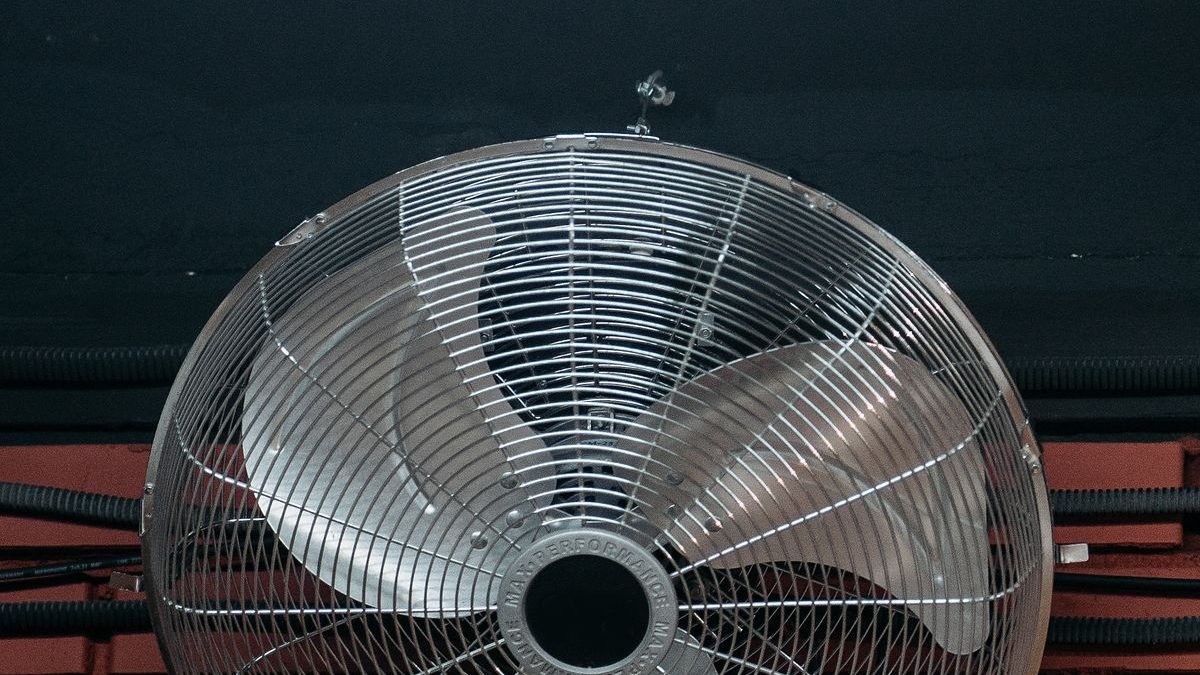
HVAC and appliance design teams tend to specify motors by habit. A blower needs a motor, the last blower used a certain frame, so the new one gets the same frame at a slightly different rating. It usually works. It also leaves performance and cost on the table, because fan and appliance loads have specific torque behaviour that suits some motor types much better than others.
Here is where a permanent magnet DC motor is genuinely the right call, and where it is not.
Blower and Fan Applications: Why the Torque Profile Fits
A fan is a variable-torque load. Torque required rises roughly with the square of speed, and absorbed power roughly with the cube. Two consequences follow that matter for motor choice.
First, starting torque demand is low. At standstill the air has no momentum, so a fan is one of the easiest loads to start. A PMDC motor, which produces high torque directly from armature current, has generous margin here even when sized close to its duty point.
Second, the payoff from speed control is enormous. Because power follows the cube of speed, running a blower at 80% speed draws roughly half the power. Any cheap route to variable speed is therefore worth a great deal in a fan application.
That is exactly what a permanent magnet DC motor offers. Speed is close to linear with applied armature voltage, so a low-cost PWM chopper gives usable speed control without a three-phase inverter, position sensors or motor-control firmware. The physics behind that linear relationship is set out in our explainer on how a PMDC motor works, and the broader case is in the benefits of using DC motors.
Our A60 series at 15–75 W and A80 series at 45–200 W cover the majority of small blower and circulation-fan duties, with supply options from 12 V DC to 220 V DC. Frame and dimensional data is on the PMDC motor range page.
Appliance Drive Systems: Cost and Controller Simplicity
Appliance drives look different from fans. They are usually intermittent, often need real starting torque against a static load, and are ruthlessly cost-sensitive because volumes are high.
PMDC motors are the default across this category for good reasons. They run straight from a DC supply with no controller at all where fixed speed is acceptable. Starting torque is high and needs no current-vector control. And an S2 or S3 intermittent duty cycle means total lifetime running hours often stay well inside the brush wear threshold, so the main disadvantage of a brushed machine never materialises.
Typical duties include drive units in mixers and food preparation equipment, portable vacuum and cleaning appliances, powered tools, and the compact drives inside printing and office machines. Where an appliance needs low speed and high torque, a gearhead does the work rather than a bigger motor, and our PMDC geared motor family with ratios up to 61:1 on the A80 and A92 frames covers most of that range.
Adjacent Duties in Building and HVAC Equipment
- Damper and louvre actuation. Short travel, high torque, very low duty. A geared PMDC unit with an electromagnetic brake holds position without continuous current.
- Condensate and circulation pumps. Covered in detail in PMDC motors for pumps.
- Air curtain and ventilation units. Fan-law loads again, with the same speed-control economics.
- Automatic doors and entrance systems. Intermittent, high starting torque, cost-driven, as discussed in our DC motor guide for automatic doors and gates.
The full spread of end markets we supply is on the applications page.
Where a PMDC Motor Is the Wrong Choice
This is the part worth reading twice, because HVAC contains the exact conditions that defeat a brushed motor.
High-speed continuous duty. A commercial ventilation fan running most of the year accumulates thousands of hours annually. Industrial carbon brushes last roughly 3,000 to 5,000 hours. A blower running near-continuously will therefore hit a brush change every year or two, and in a ceiling void or rooftop unit that service visit costs far more than the brushes.
Efficiency-led specifications. Where the equipment is sold on an efficiency rating, the 78–88% typical band for a brushed machine against 85–95% for brushless can decide the specification on its own. The operating-cost arithmetic is worked through in motor efficiency ratings explained for equipment buyers.
Very high speeds. Above roughly 10,000 RPM, brush bounce and commutator heating become limiting.
In all three cases the answer is a brushless machine. Our BLDC motor range is built to customer specification, and we developed our own BISON commercial fan around a BLDC drive precisely because continuous fan duty is where brushless pays. The comparison is set out in BLDC versus PMDC motors and, in more depth, in the PMDC versus BLDC application fit guide.
Working With Our Applications Team on a Custom Spec
For an OEM programme, the useful conversation starts from the fan curve or the load profile rather than a motor part number. Send the required airflow and static pressure, or the load torque and speed at the output, together with supply voltage, duty cycle, ambient temperature and the envelope you have. We model the design in our own motor design program and return performance data with a CAD dimensional drawing, as described in the case for customisation in PMDC motor design.
Frequently Asked Questions
Q1. Why are PMDC motors used in blowers and fans?
A fan is a variable-torque load with low starting torque demand and power that rises with the cube of speed. That makes cheap variable-speed control extremely valuable, and a PMDC motor gives near-linear speed control from applied voltage using only a low-cost PWM chopper.
Q2. What size PMDC motor does a small HVAC blower need?
Most small blower and circulation-fan duties fall inside our A60 series at 15-75 W or A80 series at 45-200 W. The correct figure comes from the fan curve: airflow and static pressure at the design point, converted to shaft power with an allowance for fan efficiency.
Q3. Are PMDC motors suitable for continuously running ventilation fans?
Generally not. Carbon brushes last roughly 3,000 to 5,000 hours, so a near-continuous fan reaches a brush change every year or two. For continuous ventilation duty a brushless DC motor is the better engineering and economic choice.
Q4. Can a PMDC motor run an appliance without any controller?
Yes. Where fixed speed is acceptable, a PMDC motor runs directly from a DC supply with no controller. Adding a simple PWM chopper gives variable speed without a microcontroller or three-phase inverter.
Q5. What about EMI from a brushed motor in an appliance?
Brush arcing does generate radio-frequency noise, which is why EMI suppression filters are standard in many of our motors and can be fitted on request to any build. It is a solved problem, but it should be specified rather than discovered during EMC testing.
Q6. Do you supply motors with an integrated gearbox for damper actuators?
Yes. Our PMDC geared motor family offers ratios from 9:1 up to 61:1 on the A80 and A92 frames, and electromagnetic brakes can be fitted so an actuator holds position without drawing continuous current.
Q7. What information do you need to quote an HVAC motor?
The fan curve or load torque and speed at the output shaft, supply voltage, duty cycle, ambient temperature range, required ingress protection, mounting configuration and the space envelope available.
Conclusion
PMDC motors fit HVAC and appliance work wherever the duty is intermittent, the budget is tight and cheap variable speed matters more than the last few percent of efficiency. Blower drives, damper actuators, appliance drive units and entrance systems all sit squarely in that zone.
They stop fitting when the equipment runs continuously, is sold on an efficiency rating, or turns above roughly 10,000 RPM. Knowing which side of that line your product sits on is most of the specification decision.
Designing an HVAC blower or appliance drive?
Send us the fan curve or load profile with your supply voltage and envelope. We will model it and return performance data.